
Need
Split-view app shell
Default options
NavigationSplitView, .sidebar lists, and inspector(isPresented:)
Why it's needed
A persistent sidebar, detail pane, and inspector match common Mac app layouts better than touch-first push navigation.

Codex use case
Use Codex to build a Mac-native SwiftUI app shell with a sidebar, detail pane, inspector, commands, and Settings.
Use Codex and the Build macOS Apps plugin to turn an app idea into a desktop-native NavigationSplitView app, keep sidebar selection stable, add menus, toolbars, and keyboard shortcuts, and move preferences into a dedicated Settings scene.
Use Codex to build a Mac-native SwiftUI app shell with a sidebar, detail pane, inspector, commands, and Settings.
Use Codex and the Build macOS Apps plugin to turn an app idea into a desktop-native NavigationSplitView app, keep sidebar selection stable, add menus, toolbars, and keyboard shortcuts, and move preferences into a dedicated Settings scene.
Use Codex and the Build macOS Apps plugin to turn an app idea into a desktop-native NavigationSplitView app, keep sidebar selection stable, add menus, toolbars, and keyboard shortcuts, and move preferences into a dedicated Settings scene.
Related links
| Skill | Why use it |
|---|---|
| Build macOS Apps | Use the macOS SwiftUI patterns, window management, AppKit interop, and build/run skills to create sidebar-detail-inspector layouts, wire menus and settings, and validate the app in a shell-first loop. |
This use case is for turning an app idea into a Mac app shell that feels built for desktop, not stretched from a touch-first stack. Ask Codex to choose the scene model first, then design the main window around stable sidebar selection, a detail surface, and an inspector for secondary controls or metadata.
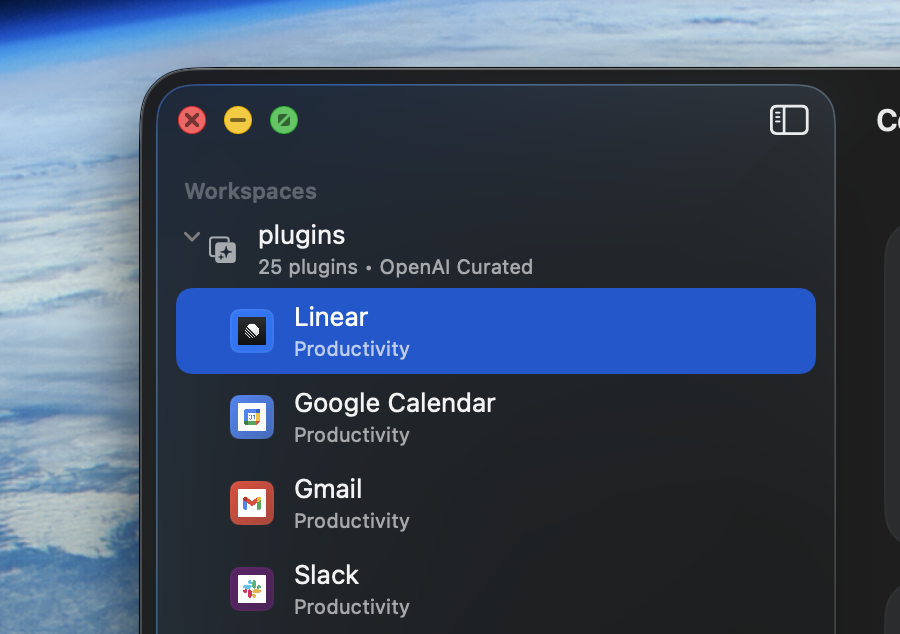
Use the Build macOS Apps plugin when you want Codex to apply that desktop structure and keep the build/run loop shell-first. Its macOS SwiftUI patterns skill is a good fit for scene design, sidebars, inspectors, commands, settings, and small AppKit bridges when SwiftUI stops just short of one Mac-specific behavior.
Prefer NavigationSplitView when the feature benefits from persistent navigation and a stable selected item. Keep sidebar rows native and lightweight, let the sidebar use system backgrounds, and reserve custom cards or dense metadata for the detail pane or inspector.
struct LibraryRootView: View {
  @SceneStorage("LibraryRootView.selection") private var selection: Item.ID?
  @SceneStorage("LibraryRootView.showInspector") private var showInspector = true

  var body: some View {
    NavigationSplitView {
      List(selection: $selection) {
        ForEach(items) { item in
          Label(item.title, systemImage: item.systemImage)
            .tag(item.id)
        }
      }
      .listStyle(.sidebar)
      .navigationTitle("Library")
    } detail: {
      ItemDetailView(selection: selection)
        .inspector(isPresented: $showInspector) {
          ItemInspectorView(selection: selection)
        }
    }
  }
}
If the app needs unusual split sizing, low-level window coordination, or custom responder-chain behavior, ask Codex to keep the SwiftUI shell intact and add only the smallest AppKit bridge required for that one gap.
Mac users should be able to discover important actions in the menu bar, the toolbar, and keyboard shortcuts. Ask Codex to wire scene-level commands, context-sensitive menu items, and toolbar buttons around the same app actions so desktop users do not have to hunt for gesture-only controls.
@main
struct LibraryApp: App {
  var body: some Scene {
    WindowGroup {
      LibraryRootView()
    }
    .commands {
      CommandMenu("Library") {
        Button("New Item") {
          // Create a new item.
        }
        .keyboardShortcut("n")

        Button("Toggle Inspector") {
          // Route this command to the focused window or selected item state.
        }
        .keyboardShortcut("i", modifiers: [.command, .option])
      }
    }

    Settings {
      LibrarySettingsView()
    }
  }
}
Use FocusedValue, scene state, or explicit selection state when a command should apply to the current detail item. If a shortcut would be registered in multiple places, ask Codex to consolidate ownership so the app has one clear command route.
SettingsFor app preferences, use a dedicated Settings scene and persist durable user choices with @AppStorage. This is usually a better Mac fit than pushing a settings screen inside the main content window.
struct LibrarySettingsView: View {
  @AppStorage("showItemMetadata") private var showItemMetadata = true

  var body: some View {
    TabView {
      Form {
        Toggle("Show Item Metadata", isOn: $showItemMetadata)
      }
      .tabItem { Label("General", systemImage: "gearshape") }
    }
    .frame(width: 460, height: 260)
    .scenePadding()
  }
}This page works best when your prompt names the app concept, the main content objects, and the primary actions, then asks Codex to build the desktop shell around that workflow first. Have the agent run a small build/run check and summarize the scene structure, command wiring, state ownership, and any AppKit edge it had to bridge.
Use one icon, one title line, and at most one short secondary line in sidebar rows. Move richer cards, counters, and metadata into the detail pane or inspector so the source list stays easy to scan.
If a user preference affects the whole app, ask Codex to put that control in Settings with @AppStorage and expose an entry point through the app menu instead of building another pushed settings screen.
If the feature needs open/save panels, first-responder control, or a custom NSView, use AppKit as a small edge around a SwiftUI-owned state model rather than rewriting the whole window in AppKit.
Need
Default options
Why it's needed
Need
Split-view app shell
Default options
NavigationSplitView, .sidebar lists, and inspector(isPresented:)
Why it's needed
A persistent sidebar, detail pane, and inspector match common Mac app layouts better than touch-first push navigation.
Need
Desktop actions and settings
Default options
commands, CommandMenu, keyboard shortcuts, and a Settings scene
Why it's needed
Menu bar actions, shortcuts, and a dedicated settings window make the feature feel like a real Mac app instead of an iOS screen stretched to desktop.
Need
State ownership
Default options
@State, @SceneStorage, @AppStorage, and explicit selection bindings
Why it's needed
Codex can keep sidebar selection, inspector visibility, and user preferences predictable without adding a view model by reflex.
Need
Native escape hatches
Default options
AppKit through narrow NSViewRepresentable or NSWindow bridges
Why it's needed
Use AppKit only for platform behaviors SwiftUI cannot express cleanly, while keeping SwiftUI as the source of truth for scene and selection state.
| Need | Default options | Why it's needed |
|---|---|---|
| Split-view app shell | NavigationSplitView , .sidebar lists, and inspector(isPresented:) | A persistent sidebar, detail pane, and inspector match common Mac app layouts better than touch-first push navigation. |
| Desktop actions and settings | commands , CommandMenu , keyboard shortcuts, and a Settings scene | Menu bar actions, shortcuts, and a dedicated settings window make the feature feel like a real Mac app instead of an iOS screen stretched to desktop. |
| State ownership | @State , @SceneStorage , @AppStorage , and explicit selection bindings | Codex can keep sidebar selection, inspector visibility, and user preferences predictable without adding a view model by reflex. |
| Native escape hatches | AppKit through narrow NSViewRepresentable or NSWindow bridges | Use AppKit only for platform behaviors SwiftUI cannot express cleanly, while keeping SwiftUI as the source of truth for scene and selection state. |
Use Codex and the Build iOS Apps plugin to identify the actions and entities your app should...
Use Codex and the Build iOS Apps plugin to audit existing iPhone and iPad UI, replace custom...
Use Codex to build macOS SwiftUI apps, wire a shell-first build-and-run loop, and add...
Loading docs agent...